Sustainable Preference Externalities Research
Modeling willingness-to-pay shifts under social information on digital platforms, aligning with sustainability and user welfare.
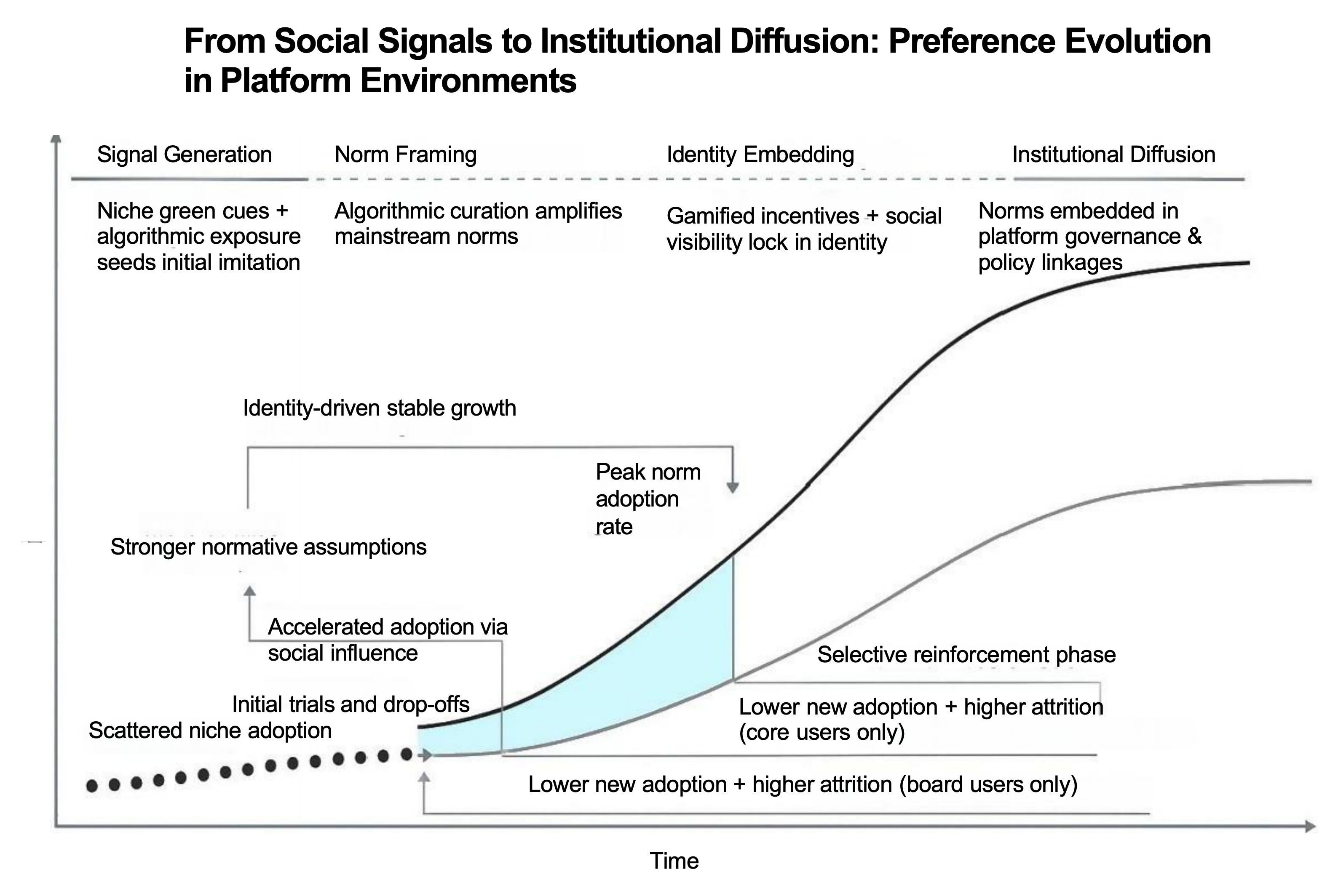
How do peer behaviors, social signals, and algorithmic curation influence individual preference formation, willingness-to-pay (WTP), and the diffusion of sustainable consumption norms in digital marketplaces?
Background & Motivation
Digital platforms create complex ecosystems where user preferences are shaped by social influence and algorithmic signals rather than isolated choices. These dynamics generate preference externalities that shift willingness-to-pay systematically.
Understanding these mechanisms is crucial for:
- Platform design & optimization: Encouraging fair and sustainable recommendation strategies
- Sustainable pricing models: Embedding ESG and green incentives into consumption choices
- Regulatory & policy development: Informing transparency and consumer protection in digital markets
- User welfare maximization: Balancing personalization with long-term sustainable outcomes
Methodology
🔬 Causal Inference Framework
A unified identification strategy that combines:
- Instrumental variables (IV) for isolating peer influence
- Difference-in-differences (DiD) for platform/policy shocks
- Causal machine learning (e.g., causal forests, heterogeneous treatment effects) for uncovering subgroup dynamics
📊 Data Sources
- Anonymized e-commerce transactions
- Social media engagement and algorithmic recommendation signals
- Cross-platform digital consumption behaviors
- Pilot datasets on green product adoption and sustainable purchasing
Key Findings
🎯 Peer Influence Effects
Peer behavior shifts WTP by 15–25%, with stronger amplification in sustainable consumption categories.
⚡ Algorithmic Signal Amplification
Recommendation systems amplify externalities by 30–40%, creating feedback loops that can accelerate or dampen green adoption.
🌍 Heterogeneous Impacts
Effects differ by user demographics, product type, and platform context. Importantly, sustainable product categories show higher sensitivity to norm framing and identity signals.
Policy & Sustainability Implications
- Platform Governance: Build transparent and accountable recommendation systems aligned with sustainability goals
- Consumer Protection: Develop safeguards against manipulation of preference externalities
- Sustainability Transitions: Inform policies that leverage digital platforms as catalysts for ESG adoption and green diffusion
- Competition Policy: Address network effects and ensure fair access to sustainable product visibility
Next Steps
- Develop counterfactual simulations for sustainable preference shifts
- Build predictive models for WTP evolution in green consumption
- Design platform interventions (e.g., identity cues, incentives) to foster sustainable adoption
- Expand research to urban air mobility (UAM) and other emerging sustainability-related markets
This research supports sustainable platform governance by combining causal inference with behavioral modeling. Presented at INFORMS 2025, with applications in policy design and platform ESG strategies.